
Tuesday, October 16, 2012

Does your company get it?
A lot of companies will say "User experience is so important!" Don't listen to their words, learn how much they respect UX by their process.
Get it
Companies that get it have at least a few of these qualities:
- UX is an understood, required, and integrated part in the product development process
- Development, QA, and PMS collaborate with user experience--ask questions during reviews and read deliverables. An engaged team ask smart questions
- Designs are regularly validated with users or through hallway usability testing
- UX speaks not just design but analytics and business value
- The code base is performance optimized and global changes aren't painful because they use sprite images, error messages in one location, and smart global and template specific .css
- QA's test cases cite the visual design comps and wireframe specifications
- The product team is engaged in user testing
Don't get it
Companies that don't get it are like this:- Development either fights tooth and nail with every innovation because it doesn't come free with their framework OR the dev team nods politely as UX presents wireframes/comps then builds whatever they'd like
- QA and TechDocs are not invited or involved until development is underway or worse, nearly finished.
- The company does not give product teams access to users
- There is no product vision that guides the long term thinking
- No Product Managers or Developers observing any usability testing sessions (face palm on this one!)
- They ask UX for comps ASAP (in other words, they don't understand the difference between UX and visual design)
- Requirements do not get their own
Wednesday, August 22, 2012
Primates of usability
The point to this post is to talk monkey (and gorilla) business. It's kind of funny how much of your usability testing might rely on primates.
 |
| MailChimp was built for marketing emails but makes a great usability list service since they make it very easy to do branded HTML blasts. |
 |
| SurveyMonkey is a super easy way to make a survey which you could use for traditional research or to screen usability participants. |
 |
| Silverback is my favorite screen recording software ever. I've used Silverback both for tutorial videos and for usability testing. |
Tuesday, August 21, 2012
Everything I ever wanted to know about makeup I learned from YouTube
You've no doubt experienced the power of movies. More recently, I've been fascinated by other dimension of video that's being exploited less in movies and more in YouTube is how-to videos and talent sharing.
In 2010, I experienced this first hand--I dove head first into the world of make-up by watching online tutorials (Michelle Phann & Kandee Johnson). I learned enough to do my own wedding makeup.
I'm not alone. Chris Anderson, curator of TED, speaks of many other examples of the power of video to fuel learning and innovation. Given our innate love for storytelling and our visual nature, why wouldn't we gravitate towards watching? Access to new communication channels has clearly shown that the medium strongly impacts the message. **
Another bonus to this video is a demonstration of the presentation tool, Prezi. For how much people complain about how much PowerPoint sucks (Tufte and many many others), I'm glad someone created an alternative.
**Some say the medium IS the message. False. If this were true logically, everything on YouTube should be the same since they share mediums. (Dwight from the Office voice used here)
In 2010, I experienced this first hand--I dove head first into the world of make-up by watching online tutorials (Michelle Phann & Kandee Johnson). I learned enough to do my own wedding makeup.
I'm not alone. Chris Anderson, curator of TED, speaks of many other examples of the power of video to fuel learning and innovation. Given our innate love for storytelling and our visual nature, why wouldn't we gravitate towards watching? Access to new communication channels has clearly shown that the medium strongly impacts the message. **
Another bonus to this video is a demonstration of the presentation tool, Prezi. For how much people complain about how much PowerPoint sucks (Tufte and many many others), I'm glad someone created an alternative.
**Some say the medium IS the message. False. If this were true logically, everything on YouTube should be the same since they share mediums. (Dwight from the Office voice used here)
Monday, August 6, 2012
Dressing is Design
At one of my first jobs I told a group of dude coworkers, as an aside to a long, yet interesting, story, "I'm not very feminine.""That it is shallow to judge by appearances is a well-known saying. That it is shallow to dismiss appearances is a lesser-known truth" - Poet Yahia Lababidi*
"Yeah, no kidding!" my coworker responded, precisely .001 millisecond later.
I had no idea. I actually thought I was sharing a deep, unknown opinion about myself, not a hard fact. The resolute and lightning fast response truly shocked me.
I have the social perception of an felt tip pen so all this time, I figured my long hair said "I'm a lady-like lady!"
I didn't think I was being compared to ALL WOMEN EVERYWHERE...not simply my coworkers. It's amazing how we can be clueless. I thought my long hair and occasional jewelry was saying something. I guess my deep voice, swearing, and swagger negated my sterling silver hoops and ponytail.
 |
| The gloves and pearls say I'm a lady, fighting to get out! |
I felt defeminized. As in "I saw the most beautiful pig, Miss. Piggy and realized I'll just never be as much of a woman compared to her... I felt so defeminized" (thank you, Kal and Jill!)
 |
| You, Miss Piggy, you are a Lady and a Scholar |
I learned clothing is not merely a tool to prevent awkward nudity, but to assert some statement which in turn, directly impacts how one is perceived.
Even if you don't pay attention to how you look, other people do In other words, dressing is a very personal way to design.
Quoted in the Fort Lauderdale Sun-Sentinel and taken from The June 2007 issue of The Week Volume 7 Issue 312.
Friday, August 3, 2012
UX designers should play more video games
Something I didn't mention about my aversion to games, was that I was afraid. I mentioned already that I was afraid of a scary controller and slow but competently mobile zombies, but I was also afraid of becoming addicted.
The day my husband came home with an Xbox 360, I was worried I would lose him to the vortex of the machine. I wondered if this was the beginning of the end of our communication. Would I ever be able to snap him out of his game-induced trance long enough to have a conversation?
In reality, it wasn't a worry. In fact, his enthusiasm for the first game he bought, Call of Duty World at War, made me so, I started sheepishly playing. Early on, I was awesome only at running into walls and getting killed by others. But after some practice, I was able to maneuver around and even got some kills in.
Playing Call of Duty World at War an epic experience. The environment is so realistic, it's actually distracting from the objective (to kill others and not die). Water is crisp, flames are mesmerizing, bugs fly around, and your gaze can follow planes in the sky. It just looks amazing. Watch the Trailer here (but buy a more recent Call of duty if you like multi-player since cheaters have ruined this mode).
Later, I'd shoot real guns, and surprisingly found myself with a host of knowledge. Without picking up one book or reading wikipedia, I could identify World War 2 weapons on sight.
How do you like that?
Later, again because my husband loved it so much, I started playing Starcraft (another amazing game, for very different reasons), trailer here. Again, there were side benefits I could not have imagined. SC2 replays and professional, yes, I said professional, tournaments became another channel to appreciate the game, the players, and the huge community of passionate people that love the game. Watch a great replay screencasted by Husky, who's voice has got to be golden ratio.
Sigh.
So what's the point of this blog post, aside from being a valentine to COD and SC2? I guess to say that we all need video games, especially over 30 female user experience designers, like me.
Though their information architecture and menus are generally awful (they need you!), they've alwayspushed tore up the envelope. In doing so, there are many design lessons such as situation awareness, head-up displays, maps, real-time collaboration, and communication. These are all practical patterns that haven't been done well on the web because the web cannot match desktop application or console game processing speed (yet?). Of course they're addictive highly engaging, by design which is the most compelling aspect worthy of study.
The day my husband came home with an Xbox 360, I was worried I would lose him to the vortex of the machine. I wondered if this was the beginning of the end of our communication. Would I ever be able to snap him out of his game-induced trance long enough to have a conversation?
In reality, it wasn't a worry. In fact, his enthusiasm for the first game he bought, Call of Duty World at War, made me so, I started sheepishly playing. Early on, I was awesome only at running into walls and getting killed by others. But after some practice, I was able to maneuver around and even got some kills in.
Playing Call of Duty World at War an epic experience. The environment is so realistic, it's actually distracting from the objective (to kill others and not die). Water is crisp, flames are mesmerizing, bugs fly around, and your gaze can follow planes in the sky. It just looks amazing. Watch the Trailer here (but buy a more recent Call of duty if you like multi-player since cheaters have ruined this mode).
Later, I'd shoot real guns, and surprisingly found myself with a host of knowledge. Without picking up one book or reading wikipedia, I could identify World War 2 weapons on sight.
How do you like that?
Later, again because my husband loved it so much, I started playing Starcraft (another amazing game, for very different reasons), trailer here. Again, there were side benefits I could not have imagined. SC2 replays and professional, yes, I said professional, tournaments became another channel to appreciate the game, the players, and the huge community of passionate people that love the game. Watch a great replay screencasted by Husky, who's voice has got to be golden ratio.
Sigh.
So what's the point of this blog post, aside from being a valentine to COD and SC2? I guess to say that we all need video games, especially over 30 female user experience designers, like me.
Though their information architecture and menus are generally awful (they need you!), they've always
Thursday, July 19, 2012
Reality is broken
Jane McGonigal's TED talk perfectly frames the main problem with the real world. We aren't empowered.
She proposes the radical idea that if we want to have a meaningful impact on problems we care about, we need a lot more play in our lives. Do you buy it?
She proposes the radical idea that if we want to have a meaningful impact on problems we care about, we need a lot more play in our lives. Do you buy it?
Monday, July 16, 2012
How I kept worrying and leared to hate the console
I was reluctant to play games as an adult.
Sure, Pitfall on the Commodore 64 was awesome (swing on a vine over crocodiles!). I loved Castle Wolfenstein (find and wear an enemy uniform to blend in!) and Mario 1-3 were great (jump up and hit blocks for treats!).
In my 20's the new generation of console games literally scared me.
Console Games are Scary: Part 1
Look at this remote: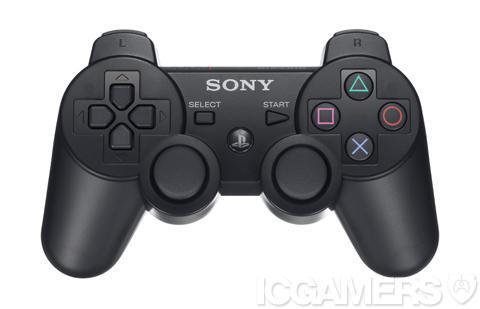 |
| Sony's PS3 Controller Image from GameSiteCenter |
I'd grown up with joysticks and Nintendo.
You know, Up, Down, Left, Right, B, A, Select, and Start.
What's with the extra six controls? Two of them aren't even binary (the two mini-thumb joysticks).
This may as well have been the the Enola Gay cockpit. This was simply too hard and I was too old.
Console Games are Scary Part 2
Even though the controllers made me wonder who moved my cheese, I put my chin up and I tried it. Alone on a sunny Saturday afternoon, I put in my roommate's copy of Resident Evil, and started pushing buttons.Things were immediately tense. I was in a dark mansion. I was not alone. Zombies were somewhere. But I could barely see! The candle lighting was faint.
Gone were the bright primary colors of my childhood games.
To top it off, scary music alluded to bad things ahead. My heart began pounding in my ears.
Like moronic teens in a scary movie, I was seriously clumsy. Though able to move, I was repeatedly walking into a wall. The graphics, which had been beautifully rendered from a distance, the candles flickering against the stone walls who's texture was uneven just like other castles I'd visited in daylight--these same graphics--got low-fi at point blank range. The walls looked like a group of dark brown polygons. I could hear zombies coming. Oh no. I managed to turn around and see the room I was in. Then it got even more scary.

Zombies were approaching at an injured snail's pace, limping in my direction and looking hungry. I tried to walk away, but I didn't know how to walk. I quickened my pace, forging ahead into the polygons like a malfunctioning robot.
Soon, a very scary-looking zombie gripped me, leaned back for the inertia, and bit my neck. Turns out, when video game zombies bite your neck, you don't simply blink into oblivion (see Mario) or fade away.
You bleed out, while the controller, yes the thing in your hands, suddenly shook. With. Each. Bite. It scared the living crap out of me. I actually didn't know controllers vibrated in the first place let alone while terrifying things happened to your poor doomed avatar.
The game left me wide-eyed, heart-racing and ready to quit. I turned off the machine and just like any scary movie I accidentally watched, tried never to think about it again.
==
Things changed....I'll let you know how soon.
Friday, July 13, 2012

Wednesday, July 11, 2012
If heuristics were written from the customer's point of view?
Heuristics are generally written in terms of the development team. What if they were in terms of the user? I rewrote Jakob Nielsen's Heuristics* in this light:
Beyond these, here are even more:
1. Tell me where I am, what's going on, and where I'm going
2. Use language I understand and keep it consistent
3. I make mistakes. Let me undo them.
4. Meet my expectations on layout, style, and writing
5. and 9. Don't let me make mistakes, if something went wrong, take the fall if you're to blame but always tell me how I can fix it
6. You're a computer, you are my records. I'm not the one with an amazing memory--you are.
7. I do certain actions over and over, make those easy.
8. It's hard to see what's important when you overwhelm me.
10. If I can't figure things out on my own, give me useful and timely resources. Let me look things up.
Beyond these, here are even more:
a. Honor my Request; do as I ask.
b. Make my life better
c. Save me time, money or both
d. Don't make me tell you to do something twice. If I asked you, just do it. If it was a mistake, let me undo it. See #3.
e. Help me choose when there are many options.
f. Don't make me wait too long
g. Don't send me to the wolves; I'm not always up for anonymous comments. Don't force me to receive hurtful/mean spirited slings/arrows.
h. Let me plug in, or plug out.
i. Let me express myself and be creative
j. Read my mind. Or at least anticipate things I'll likely want. For example, I'm likely to want to view things I've recently viewed
k. Don't try to sell me stuff at every turn. I'm not a wallet, I'm a person.
l. When I search, be flexible. I don't call things what you might call them. I may not even know the name!
m. When we first meet, help me get started but go away when I ask, somewhere I can find you later.
n. Put me first. I'm the reason you exist!
Subscribe to:
Posts (Atom)