Thursday, January 24, 2013

"Ew, Get an office!"

As a contractor/small business owner/entrepreneur/consultant/studio owner/principle or whatever title the situation demands, I work from home 95% of the time.

This means:
  • Every time I get up to use the restroom/eat my cat is on my keyboard smooshing every key she can and while I'm working, she's jumping up trying to walk on it. "KITYY!!!" I yell and gently toss her to the side at least five times per day.
  • Once when I yelled "Kitty" my mute button was not on and I was in a phone conference.
  • Every time my husband blends his breakfast smoothie, vacuums, or plays his music and I'm in a meeting I want to plug my ears.
  • I wear pajama bottoms and socks.
  • My hygiene could be...better.
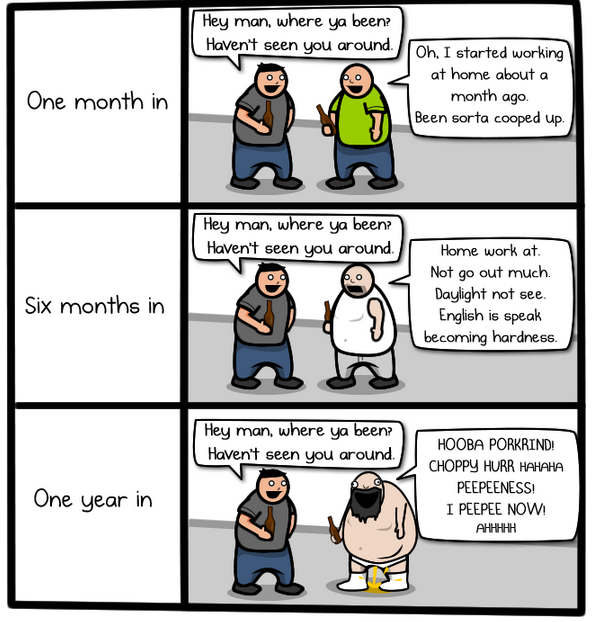
I've been running TUX Studio for nearly three years (more on that in a later post), well beyond the one year it takes to end up like this guy (see bottom panel below).


So, I've broken down & got a space at Tech Liminal. Oakland's solution to pajamas-all-day, keyboard stomping cats, blenders, and poor grooming. I'm here now, with jeans and shoes. I should brush my teeth next time.  ; )

Tuesday, January 15, 2013

Scene from an airport

Guess what this yellow sign is for.

I'll give you a minute.

Take your time.


OK, For those of you stumped, the yellow sign is to prevent someone from walking into the janitor's closet. The women's restroom is actually strait ahead and to the right. 

This makes me want to repeatedly hit my head (ideally, on the wall with the lying placard). 

Instead of the airport changing the placards so they don't lead a stream of women to the wrong place, the folks responsible for cleaning the bathroom have fixed it themselves, quite cleverly. 

A workaround. 

Monday, January 14, 2013

Where the fuck are the Olives?

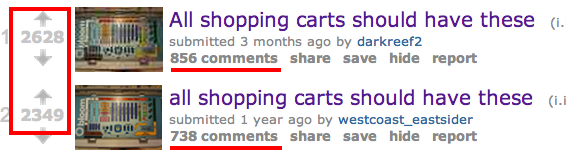
We naturally thirst for deeper and alternate ways to solve problems. I found these two images on separate Reddit posts recently. The caption on both was something like "Why isn't this on every shopping cart?"

Index of items by aisle.
Map of store.

All I could think was "Yup."

All this information is already in the store, technically, since the isles contain the categories, yet a map and index are useful because they'd be right in front of you, deepening the solution set and anticipating a common and frustrating grocery store problem. For example: "Where the fuck are the olives?"

Consider some of the ways we might approach searching for olives in a store:
  1. walk the edge of the store reading each aisle description
  2. walk the edge of the store looking at the stuff on the edge of the asiles and go down aisles which seem to have things which are similar to olives
  3. walk the entire store (brute force)
  4. ask an employee (or a person dressed as an employee)
And how each person might approach this problem and how one person would vary their approach based on many factors. I, for example, sometimes jump right to #4 unless I don't feel like talking to anyone then #4 is my last resort). We all know someone who would never do #4, don't we?
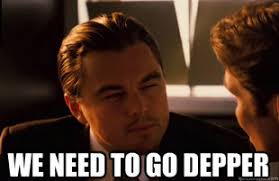
I *might* be overdoing the UX memes.

Also, a bigger question, what about searching problems that are more difficult than olives (search by gluten-free, kosher, good for kids, etc)*?

What's interesting about the shopping map posts on reddit (it appeared once then was reposted 9 months later) is the incredible response from the reddit community. Over 1,600 people had something to say about having maps on shopping carts, and over 10,000 people agreed with this.


Wow.

Digging into the comments reveals something even more interesting. While an on-cart map is generally considered awesome and overdue, people felt grocery stores don't want you to have it. The top comments (reddit uses an upvoting system) are about how on cart maps are against store goals for earning. Check them out:

See full comments from original post

and

See comments from repost

Huh, so the customer experience is seen by customers to be at odds with business goals and the reason why the can't expect excellent experiences.

We know as UX practitioners, this isn't true. Excellent customer experiences are tied tightly with return on investment (if you do not know this, . In other words, companies with great customer experiences do better financially.


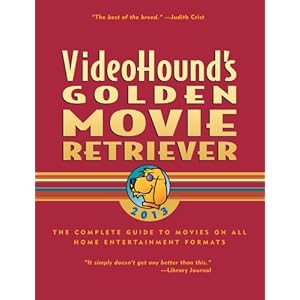
*Category search is vastly underrated. Speaking of category search, IMHO, the best category movie index is VideoHound; sure they cross-list actors, directors, etc (IMDB does this) but they list movies by really cool categories, such as Chicago, NYC, Soccer, Friendship etc. Vastly important when you remember  only that it had to do with Gymnastics and you saw it as a kid in the 80's. Answer: Nadia.

Monday, December 10, 2012

Psychological impact of origin


How important is the history, context, and origin of an experience? If you believe Paul Bloom, it's nearly everything to our brain.


Tuesday, October 16, 2012

Just curious...

How many golden ages were recognized as such during the experience?

Does your company get it?

A lot of companies will say "User experience is so important!" Don't listen to their words, learn how much they respect UX by their process.

Get it

Companies that get it have at least a few of these qualities:

  • UX is an understood, required, and integrated part in the product development process
  • Development, QA, and PMS collaborate with user experience--ask questions during reviews and read deliverables. An engaged team ask smart questions
  • Designs are regularly validated with users or through hallway usability testing
  • UX speaks not just design but analytics and business value 
  • The code base is performance optimized and global changes aren't painful because they use sprite images, error messages in one location, and smart global and template specific .css
  • QA's test cases cite the visual design comps and wireframe specifications
  • The product team is engaged in user testing 

Don't get it

Companies that don't get it are like this:

  • Development either fights tooth and nail with every innovation because it doesn't come free with their framework OR the dev team nods politely as UX presents wireframes/comps then builds whatever they'd like
  • QA and TechDocs are not invited or involved until development is underway or worse, nearly finished. 
  • The company does not give product teams access to users 
  • There is no product vision that guides the long term thinking 
  • No Product Managers or Developers observing any usability testing sessions (face palm on this one!)
  • They ask UX for comps ASAP (in other words, they don't understand the difference between UX and visual design)
  • Requirements do not get their own 

Wednesday, August 22, 2012

Primates of usability

The point to this post is to talk monkey (and gorilla) business. It's kind of funny how much of your usability testing might rely on primates.


MailChimp was built for marketing emails but makes a great usability list service since they make it very easy to do branded HTML blasts.
SurveyMonkey is a super easy way to make a survey which you could use for traditional research or to screen usability participants.
Silverback is my favorite screen recording software ever. I've used Silverback both for tutorial videos and for usability testing.


Tuesday, August 21, 2012

Everything I ever wanted to know about makeup I learned from YouTube

You've no doubt experienced the power of movies. More recently, I've been fascinated by other dimension of video that's being exploited less in movies and more in YouTube is how-to videos and talent sharing.

In 2010, I experienced this first hand--I dove head first into the world of make-up by watching online tutorials (Michelle Phann & Kandee Johnson). I learned enough to do my own wedding makeup.  

I'm not alone. Chris Anderson,  curator of TED, speaks of many other examples of the power of video to fuel learning and innovation. Given our innate love for storytelling and our visual nature, why wouldn't we gravitate towards watching? Access to new communication channels has clearly shown that the medium strongly impacts the message. **

Another bonus to this video is a demonstration of the presentation tool, Prezi. For how much people complain about how much PowerPoint sucks (Tufte and many many others), I'm glad someone created an alternative.

**Some say the medium IS the message. False. If this were true logically, everything on YouTube should be the same since they share mediums. (Dwight from the Office voice used here)